
Get to know PETAL Consortium’s Computational Biologist, Eric Liu, PhD!
Get to know PETAL Consortium’s Computational Biologist, Eric Liu, PhD!
Get to know PETAL Consortium’s Computational Biologist, Eric Liu, PhD!
By Katrina Fu
By Katrina Fu
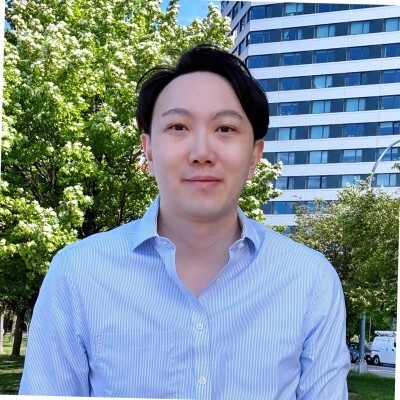
Eric Liu, PhD
Eric Liu, PhD
Eric Liu, PhD, is a Computational Biologist with PETAL Consortium and a Bioinformatics Scientist at Dana-Farber Cancer Institute. He earned his bachelor’s degree in chemistry and information management and a master’s degree in pharmaceutical sciences from National Taiwan University, followed by a master’s degree in biomedical informatics from Columbia University. He completed his PhD in computational biology at Cornell University and postdoctoral training at Memorial Sloan Kettering Cancer Center.
Eric Liu, PhD, is a Computational Biologist with PETAL Consortium and a Bioinformatics Scientist at Dana-Farber Cancer Institute. He earned his bachelor’s degree in chemistry and information management and a master’s degree in pharmaceutical sciences from National Taiwan University, followed by a master’s degree in biomedical informatics from Columbia University. He completed his PhD in computational biology at Cornell University and postdoctoral training at Memorial Sloan Kettering Cancer Center.
In this Q&A, meet Eric Liu, PETAL Consortium’s Computational Biologist!
In this Q&A, meet Eric Liu, PETAL Consortium’s Computational Biologist!
In this Q&A, meet Eric Liu, PETAL Consortium’s Computational Biologist!
Why did you want to major in chemistry and information management during undergrad?
Why did you want to major in chemistry and information management during undergrad?
I chose to major in chemistry and information management because I wanted a strong foundation in both molecular science and computer science. Training in chemistry equipped me to study protein design and protein-ligand interactions, while information management provided formal training in computer science and data analysis. Together, these majors allowed me to apply data-driven and computational approaches to problems in pharmaceutical and biomedical science, which shaped my subsequent academic and research trajectory.
I chose to major in chemistry and information management because I wanted a strong foundation in both molecular science and computer science. Training in chemistry equipped me to study protein design and protein-ligand interactions, while information management provided formal training in computer science and data analysis. Together, these majors allowed me to apply data-driven and computational approaches to problems in pharmaceutical and biomedical science, which shaped my subsequent academic and research trajectory.
Why did you want to study biomedical informatics and computational biology in graduate school?
Why did you want to study biomedical informatics and computational biology in graduate school?
I was drawn to biomedical informatics and computational biology because I wanted to understand why cancers arise at the molecular level and how genomic alterations drive disease. The emergence of next-generation sequencing technologies made it possible to study these questions at an unprecedented scale, and I was excited by the opportunity to use computational approaches to make sense of such complex data. I was fortunate to pursue my PhD during the era of large cancer genomics consortia such as The Cancer Genome Atlas and Pan-Cancer Analysis of Whole Genomes, which gave me a front-row view of how high-impact, collaborative cancer genomics studies were conducted at institutions like Weill Cornell Medicine and Memorial Sloan Kettering Cancer Center.
I was drawn to biomedical informatics and computational biology because I wanted to understand why cancers arise at the molecular level and how genomic alterations drive disease. The emergence of next-generation sequencing technologies made it possible to study these questions at an unprecedented scale, and I was excited by the opportunity to use computational approaches to make sense of such complex data. I was fortunate to pursue my PhD during the era of large cancer genomics consortia such as The Cancer Genome Atlas and Pan-Cancer Analysis of Whole Genomes, which gave me a front-row view of how high-impact, collaborative cancer genomics studies were conducted at institutions like Weill Cornell Medicine and Memorial Sloan Kettering Cancer Center.
What inspired you to go into medical research?
What inspired you to go into medical research?
What inspired me to go into medical research was the “aha” moment of uncovering an oncogenic mechanism and then seeing that discovery translate into a therapy that could help patients. Realizing that careful scientific investigation could move from understanding disease biology to informing an approved drug made the impact of medical research very tangible to me, and it motivated me to pursue work that bridges fundamental discovery and clinical relevance.
What inspired me to go into medical research was the “aha” moment of uncovering an oncogenic mechanism and then seeing that discovery translate into a therapy that could help patients. Realizing that careful scientific investigation could move from understanding disease biology to informing an approved drug made the impact of medical research very tangible to me, and it motivated me to pursue work that bridges fundamental discovery and clinical relevance.
Why did you want to join PETAL Consortium? What is your research about?
Why did you want to join PETAL Consortium? What is your research about?
I wanted to join PETAL Consortium because it uniquely integrates large-scale multi-omics data with deep clinical insight to address fundamental questions in T-cell lymphoma. My research focuses on understanding the evolutionary trajectory from normal T-cells to malignant T-cell lymphoma and uncovering how tumor cells evade immune surveillance. Ultimately, my goal is to identify biological mechanisms that can be leveraged to improve treatment responses, particularly in the context of immunotherapy.
I wanted to join PETAL Consortium because it uniquely integrates large-scale multi-omics data with deep clinical insight to address fundamental questions in T-cell lymphoma. My research focuses on understanding the evolutionary trajectory from normal T-cells to malignant T-cell lymphoma and uncovering how tumor cells evade immune surveillance. Ultimately, my goal is to identify biological mechanisms that can be leveraged to improve treatment responses, particularly in the context of immunotherapy.
What does a day-in-your-life at PETAL Consortium look like?
What does a day-in-your-life at PETAL Consortium look like?
A typical day involves staying up to date with the latest cancer research by reading papers and posts from scientists in the field, followed by exploring how new or emerging computational approaches could be applied to newly available datasets. Much of my time is spent analyzing data, testing hypotheses, and collaborating with experimental and clinical colleagues.
A typical day involves staying up to date with the latest cancer research by reading papers and posts from scientists in the field, followed by exploring how new or emerging computational approaches could be applied to newly available datasets. Much of my time is spent analyzing data, testing hypotheses, and collaborating with experimental and clinical colleagues.
Any interests/hobbies?
Any interests/hobbies?
I enjoy exploring new coffee shops and bakeries–it’s a great way to unwind and discover new places.
I enjoy exploring new coffee shops and bakeries–it’s a great way to unwind and discover new places.
What’s your perfect meal?
What’s your perfect meal?
Triple grilled shrimp tacos paired with an ice-cold sparkling water.
Triple grilled shrimp tacos paired with an ice-cold sparkling water.
Favorite movie?
Favorite movie?
Zootopia–always a favorite!
Zootopia–always a favorite!
Dream vacation destination?
Dream vacation destination?
Iceland–especially for the landscapes and Northern Lights.
Iceland–especially for the landscapes and Northern Lights.
Since we’re PETAL Consortium, favorite flower?
Since we’re PETAL Consortium, favorite flower?
Phlox–it’s simple and vibrant.
Phlox–it’s simple and vibrant.
For Healthcare Professionals
@2026 PETAL Consortium • All rights reserved
For Healthcare Professionals
@2026 PETAL Consortium • All rights reserved
For Healthcare Professionals
@2026 PETAL Consortium • All rights reserved