Get to know PETAL Consortium’s Principal
Investigator at City of Hope, Christina Poh, MD!
Get to know PETAL Consortium’s Principal
Investigator at City of Hope, Christina Poh, MD!
Get to know PETAL Consortium’s Principal
Investigator at City of Hope, Christina Poh, MD!
By Katrina Fu
By Katrina Fu
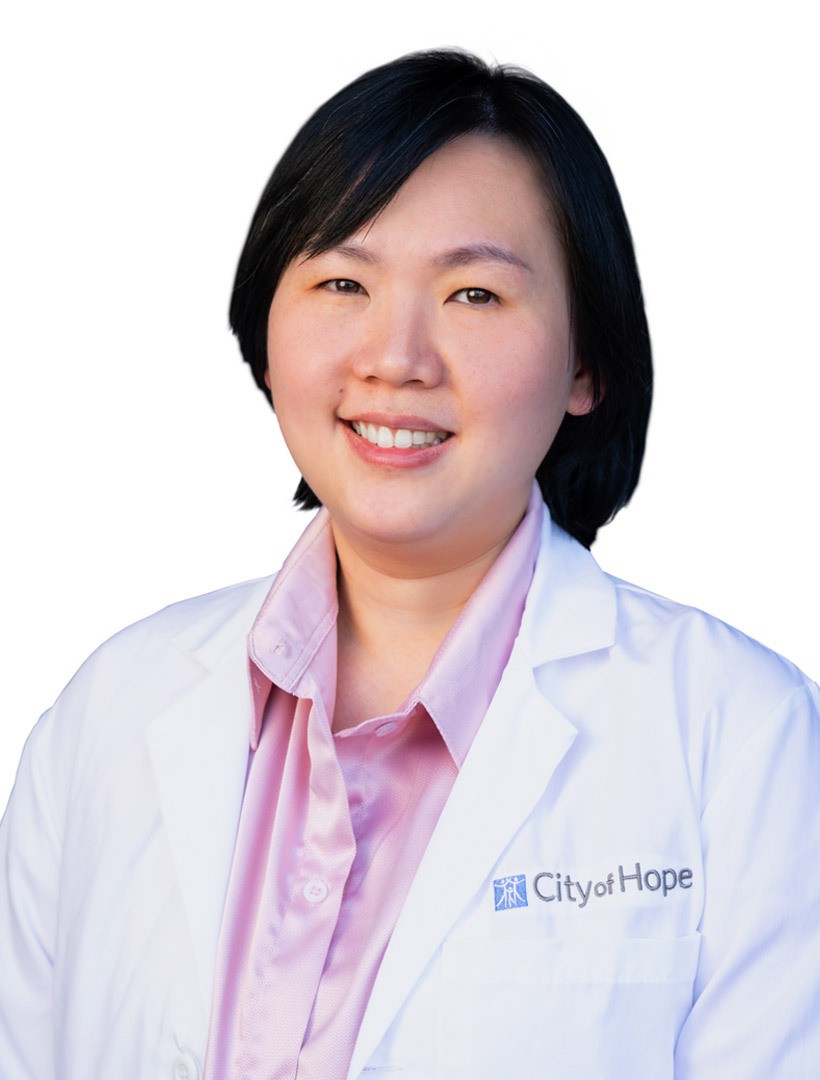
Christina Poh, MD
Christina Poh, MD
Christina Poh, MD is an Associate Clinical Professor in the
Division of Lymphoma and the Director of the T-Cell Lymphoma Program at City of Hope Cancer Center. She completed a bachelor’s in neuroscience at University of Rochester. She earned her medical degree and completed her internship at Loma Linda University. She then pursued a fellowship in hematology and oncology, with a focus on cancer genomics, at the University of California (UC), Davis. Previously, she led the T-cell lymphoma program at University of Washington/Fred Hutchinson Cancer Center.
Christina Poh, MD is an Associate Clinical Professor in the
Division of Lymphoma and the Director of the T-Cell
Lymphoma Program at City of Hope Cancer Center. She
completed a bachelor’s in neuroscience at University of
Rochester. She earned her medical degree and completed her internship at Loma Linda University. She then pursued a
fellowship in hematology and oncology, with a focus on cancer genomics, at the University of California (UC), Davis.
Previously, she led the T-cell lymphoma program at University of Washington/Fred Hutchinson Cancer Center.
Christina Poh, MD is an Associate Clinical Professor in the Division of Lymphoma and the Director of the T-Cell Lymphoma Program at City of Hope Cancer Center. She completed a bachelor’s in neuroscience at University of Rochester. She earned her medical degree and completed her internship at Loma Linda University. She then pursued a fellowship in hematology and oncology, with a focus on cancer genomics, at the University of California (UC), Davis. Previously, she led the T-cell lymphoma program at University
of Washington/Fred Hutchinson Cancer Center.
In this Q&A, meet Dr. Christina Poh, PETAL Consortium’s
Principal Investigator at City of Hope!
In this Q&A, meet Dr. Christina Poh, PETAL Consortium’s
Principal Investigator at City of Hope!
In this Q&A, meet Dr. Christina Poh, PETAL Consortium’s
Principal Investigator at City of Hope!
Why did you want to become a doctor?
Why did you want to become a doctor?
From a young age, I was drawn to medicine. I grew up in Thailand in a family with humble beginnings, where no one in my family–or even in my neighborhood–had basic medical knowledge. I saw firsthand how a lack of access to healthcare and information could shape people’s lives, often leading to preventable suffering. Witnessing that gap made me realize how transformative medical understanding can be, not only for individuals but for entire communities. I was inspired by the idea that, as a physician, I could help bridge that gap and empower others through knowledge and care. Becoming a doctor became a way to give back to my family and community, to advocate for those who are often overlooked, and to contribute to improving healthcare for future generations.
From a young age, I was drawn to medicine. I grew up in Thailand in a family with humble beginnings, where no one in my family–or even in my neighborhood–had basic medical knowledge. I saw firsthand how a lack of access to healthcare and information could shape people’s lives, often leading to preventable suffering. Witnessing that gap made me realize how transformative medical understanding can be, not only for individuals but for entire communities. I was inspired by the idea that, as a physician, I could help bridge that gap and empower others through knowledge and care. Becoming a doctor became a way to give back to my family and community, to advocate for those who are often overlooked, and to contribute to improving healthcare for future generations.
Why did you want to specialize in oncology and hematology?
Why did you want to specialize in oncology and hematology?
I’ve had multiple family members and friends diagnosed with cancer, and the medical care available to them was not always as advanced or accessible as what we have in the United States. Witnessing that firsthand motivated me to contribute to the progress being made here, with the hope that I can one day bring that
knowledge and expertise back to my community.
I was also drawn to oncology because it is a rapidly evolving field–one where scientific discovery directly translates into better outcomes and new possibilities for patients. At the same time, it offers the opportunity to build deep, meaningful relationships with the individuals and families you care for. That combination of
innovation, impact, and human connection is what inspired me to pursue hematology and oncology.
I’ve had multiple family members and friends diagnosed with cancer, and the medical care available to them was not always as advanced or accessible as what we have in the United States. Witnessing that firsthand motivated me to contribute to the progress being made here, with the hope that I can one day bring that
knowledge and expertise back to my community.
I was also drawn to oncology because it is a rapidly evolving field–one where scientific discovery directly translates into better outcomes and new possibilities for patients. At the same time, it offers the opportunity to build deep, meaningful relationships with the individuals and families you care for. That combination of
innovation, impact, and human connection is what inspired me to pursue hematology and oncology.
What led to your interest in researching T-cell lymphomas?
What led to your interest in researching T-cell lymphomas?
During my time as a lymphoma specialist at Fred Hutchinson Cancer Center, the institution’s T-cell lymphoma specialist left, and I unexpectedly inherited many of his patients. As I began caring for individuals with T-cell lymphomas, it quickly became clear how limited and suboptimal the available treatment options were.
Their experiences highlighted the urgent need for better therapies, deeper biological understanding, and more effective clinical strategies.
Seeing firsthand how much progress is still needed inspired me to focus my research on this rare and complex group of diseases. It is a field where even incremental advancements can make a meaningful difference, and I felt compelled to contribute to that effort.
During my time as a lymphoma specialist at Fred Hutchinson Cancer Center, the institution’s T-cell lymphoma specialist left, and I unexpectedly inherited many of his patients. As I began caring for individuals with T-cell lymphomas, it quickly became clear how limited and suboptimal the available treatment options were.
Their experiences highlighted the urgent need for better therapies, deeper biological understanding, and more effective clinical strategies.
Seeing firsthand how much progress is still needed inspired me to focus my research on this rare and complex group of diseases. It is a field where even incremental advancements can make a meaningful difference, and I felt compelled to contribute to that effort.
Why did you want to join PETAL Consortium?
Why did you want to join PETAL Consortium?
I met Dr. Salvia Jain, founder and principal investigator of PETAL Consortium, through research collaborations. As we began working together, we often discussed ideas on how to move the field of T-cell lymphoma forward–conversations that closely aligned with PETAL’s mission and vision. I was genuinely energized by the Consortium’s commitment to accelerating research, fostering collaboration, and improving care for patients with these rare diseases. Joining PETAL allowed me to become part of a community united by the drive to advance the field and support patients in a meaningful, lasting way.
I met Dr. Salvia Jain, founder and principal investigator of PETAL Consortium, through research collaborations. As we began working together, we often discussed ideas on how to move the field of T-cell lymphoma forward–conversations that closely aligned with PETAL’s mission and vision. I was genuinely energized by the Consortium’s commitment to accelerating research, fostering collaboration, and improving care for patients with these rare diseases. Joining PETAL allowed me to become part of a community united by the drive to advance the field and support patients in a meaningful, lasting way.
What inspired the creation of HOPE-PTCL?
What inspired the creation of HOPE-PTCL?
During conversations with Dr. Jain, I shared an idea that had been on my mind for some time: creating a dedicated, trustworthy website for patients with T-cell lymphoma. In clinic, I frequently saw how few reliable, patient-friendly resources existed to help individuals understand their disease and make informed decisions.
From this shared recognition, HOPE-PTCL (Hub for Outreach and Patient Engagement in Peripheral T-cell Lymphoma) was developed.
During conversations with Dr. Jain, I shared an idea that had been on my mind for some time: creating a dedicated, trustworthy website for patients with T-cell lymphoma. In clinic, I frequently saw how few reliable, patient-friendly resources existed to help individuals understand their disease and make informed decisions.
From this shared recognition, HOPE-PTCL (Hub for Outreach and Patient Engagement in Peripheral T-cell Lymphoma) was developed.
What does a day-in-your-life at look like?
What does a day-in-your-life at look like?
Most of my time is devoted to clinical medicine. I care for nearly all the T-cell lymphoma patients at City of Hope, which is the core of my work and the part of my day that keeps me most grounded and inspired. The rest of my time is spent running clinical trials, developing new research ideas, and collaborating with T-cell
lymphoma investigators at other institutions to answer key questions and advance new treatment approaches in this field.
Most of my time is devoted to clinical medicine. I care for nearly all the T-cell lymphoma patients at City of Hope, which is the core of my work and the part of my day that keeps me most grounded and inspired. The rest of my time is spent running clinical trials, developing new research ideas, and collaborating with T-cell
lymphoma investigators at other institutions to answer key questions and advance new treatment approaches in this field.
Any interests/hobbies?
Any interests/hobbies?
I spend a lot of time with my family. I have two young boys, so that’s where most of my time goes.
I spend a lot of time with my family. I have two young boys, so that’s where most of my time goes.
Dream vacation destination?
Dream vacation destination?
I always try to go back to Thailand. I’m clearly biased, but I think it’s the greatest country—home to the best food and the friendliest people.
I always try to go back to Thailand. I’m clearly biased, but I think it’s the greatest country—home to the best food and the friendliest people.
Favorite meal?
Favorite meal?
Pad see ew (Thai stir-fried noodles)–when I was a kid, I used to eat it three meals a day!
Pad see ew (Thai stir-fried noodles)–when I was a kid, I used to eat it three meals a day!
Since we’re PETAL Consortium, favorite flower?
Since we’re PETAL Consortium, favorite flower?
Roses 🌹
Roses 🌹
For Healthcare Professionals
@2026 PETAL Consortium • All rights reserved
For Healthcare Professionals
@2026 PETAL Consortium • All rights reserved
For Healthcare Professionals
@2026 PETAL Consortium • All rights reserved